
The Gentle Comfort of Stillness
Exploring the benefits of restorative yoga for providing comfort, dignity, and peace to patients and caregivers in hospice care.

Community Showcase
Missed the live presentation? You can now watch the full recording of this pilot study presentation from the Yoga & Neuroscience Community Showcase.
Moments of Ease: A Restorative Yoga Pilot for Hospice Patients and Caregivers
Presented on Wednesday, November 13, 2025
Learn about the protocol, the neuroscience, and the vision for bringing this gentle, supportive care to those who need it most.
Watch the Recording BelowOur Vision
This project introduces a six-week pilot program designed to bring the profound benefits of restorative yoga to one of life’s most tender stages. We aim to ease anxiety, reduce discomfort, and enhance emotional well-being for both patients and their caregivers through simple, accessible, and comfort-focused practices.
Enhance Comfort
Use fully supported poses to soothe the body and calm the nervous system, reducing perceived pain and agitation.
Provide Dignity
Offer a gentle, non-invasive practice that honors the individual's needs and provides moments of peace and connection.
Support Caregivers
Extend the benefits of relaxation and stress-reduction to family members and hospice staff, supporting their well-being.
The Pilot Program
Currently in the planning phase, we are developing a formal research protocol with the goal of obtaining IRB approval. Our approach is evidence-informed, safe, and designed specifically for the unique needs of a hospice environment.
Program Details
-
✓
Duration: A six-week pilot study.
-
✓
Sessions: 30-minute sessions held 1-2 times per week, either bedside or in small, quiet groups.
-
✓
Methods: Fully supported postures using props, mindful breathing exercises, and guided relaxation.
-
✓
Impact Measurement: Simple pre/post session surveys on well-being (comfort, pain, anxiety) along with observations from staff and family.
The Neuroscience of Calm
Restorative yoga is uniquely suited for palliative care because it directly engages the parasympathetic nervous system—the body's "rest and digest" system. By using props to completely support the body, we eliminate physical strain, allowing for deep relaxation.
This process helps to:
- Lower heart rate and blood pressure.
- Soothe the nervous system and reduce stress hormones like cortisol.
- Improve breathing patterns, leading to a greater sense of calm.
- Promote interoceptive awareness, the sense of the internal condition of the body.
This project contributes to the growing dialogue between neuroscience and yoga, providing a practical application for how mind-body practices can support well-being at the end of life.
A Glimpse into the Practice
Watch the full presentation of "Moments of Ease" below to understand the gentle, supportive, and calming nature of a restorative yoga session designed for hospice settings.
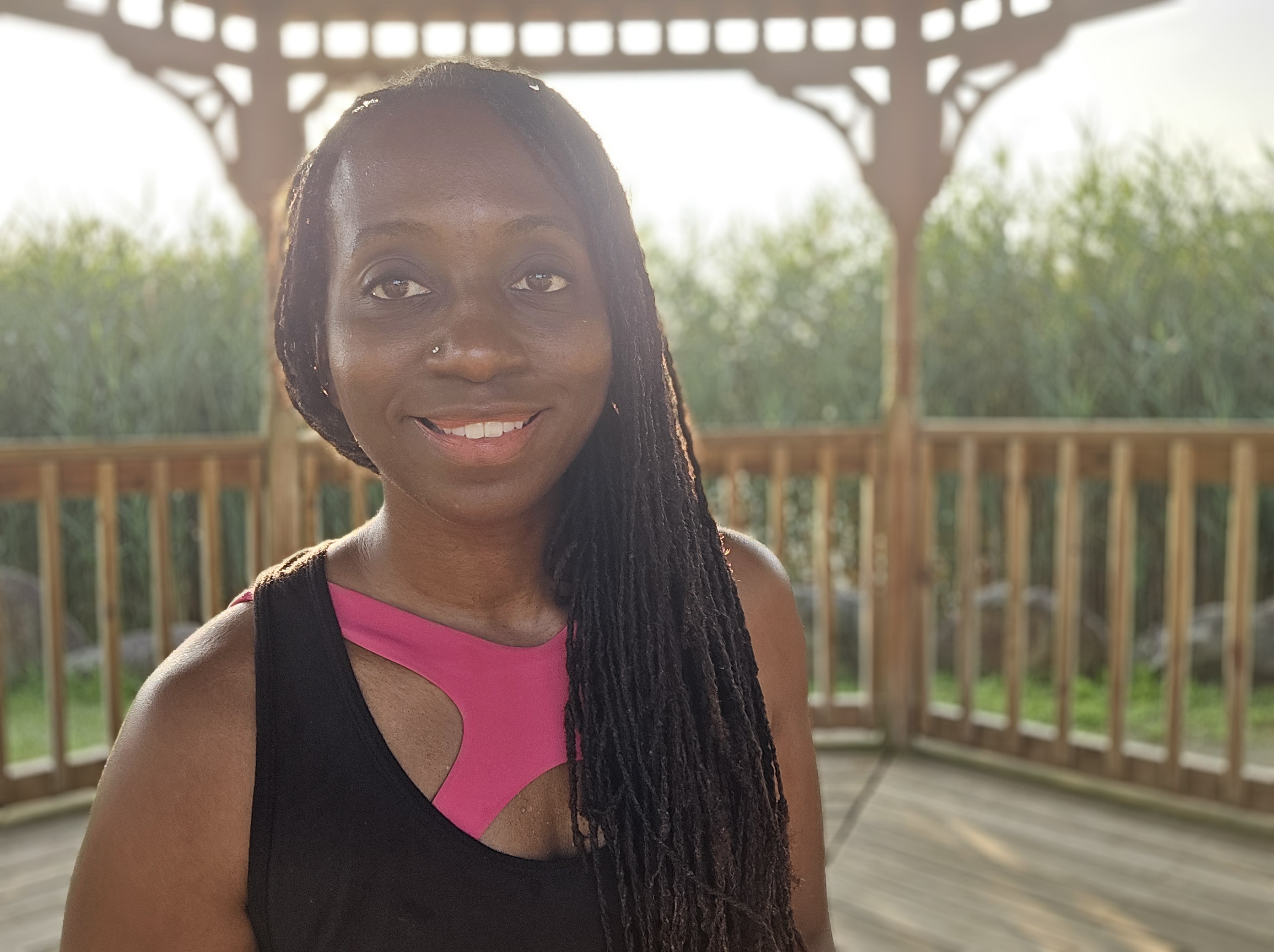
LaRonda Koffi
Certified Restorative Yoga Teacher
Founder, Alchemy Joy Inc.
LaRonda Koffi holds a Master’s degree from the University of Pennsylvania and has over 20 years of dedicated yoga practice. She brings a holistic approach that integrates meditation, qigong, and evidence-informed movement.
Her current work focuses on this hospice pilot program to explore how restorative yoga can ease anxiety, reduce discomfort, and provide dignity for patients and caregivers. Through her company, Alchemy Joy, she offers a variety of wellness classes in community and clinical settings.
As a member of the National Small Business Association Leadership Council, LaRonda is a voice at the intersection of wellness, policy, and community care.
Let's Collaborate
We are seeking to connect with hospice providers, medical professionals, yoga teachers, and researchers who are passionate about making supportive, evidence-informed practices more available in end-of-life care. If you are interested in collaborating, sharing insights, or learning more, please reach out.
Contact LaRonda Koffi🧠 Scientific References
Here are peer-reviewed studies and reviews relevant to restorative yoga, the autonomic nervous system, and hospice or palliative care.
Campelo, G., Brito, C., Nunes, L., Oliveira, L., Gonçalves, J., & Silva, A. (2025). Long-term effects of yoga-based practices on neural, cognitive performance and cardiac autonomic modulation. BMC Complementary Medicine and Therapies, 25(1), 82.
Key Finding: Yoga increases cardiac parasympathetic modulation, showing a mechanism relevant to calming and rest responses.
Deng, G., Rusch, V., Vickers, A., Malhotra, V., Seidman, J., Piwnica-Worms, H., ... & Cassileth, B. (2022). Effects of vigorous versus restorative yoga practice on cognitive function in sedentary breast and ovarian cancer survivors: a randomized controlled pilot trial. Integrative Cancer Therapies, 21, 15347354221089221.
Key Finding: Compares active vs. restorative yoga; finds restorative yoga may have particular advantages for cognition and reducing stress.
Deshpande, A., Nagendra, H. R., & Raghuram, N. (2018). Yoga for palliative care. Indian Journal of Palliative Care, 24(Suppl), S91–S97.
Key Finding: A review of yoga in palliative settings showed improvements in sleep, mood, and stress, and helped in managing physical symptoms.
Heeter, C., Allbritton, M., Lehto, R., Miller, P., McDaniel, P., & Paletta, M. (2021). Feasibility, acceptability, and outcomes of a yoga-based meditation intervention for hospice professionals to combat burnout. International Journal of Environmental Research and Public Health, 18(5), 2515.
Key Finding: Yoga-based meditation over 6 weeks increased interoceptive awareness and reduced burnout in hospice staff.
Manjunath, G. N. (2025). The role of yoga in palliative care: Insights from a single case study. Cureus, 17(3), e62152.
Key Finding: A case study in hospice/palliative care showed personalized yoga therapy positively affected symptom management.