What We Carry Forward
What We Carry Forward
An afternoon of Filipino dance, my great-grandmother’s china, and the question of what endures.
By LaRonda Koffi · Alchemy Joy · October 20, 2026
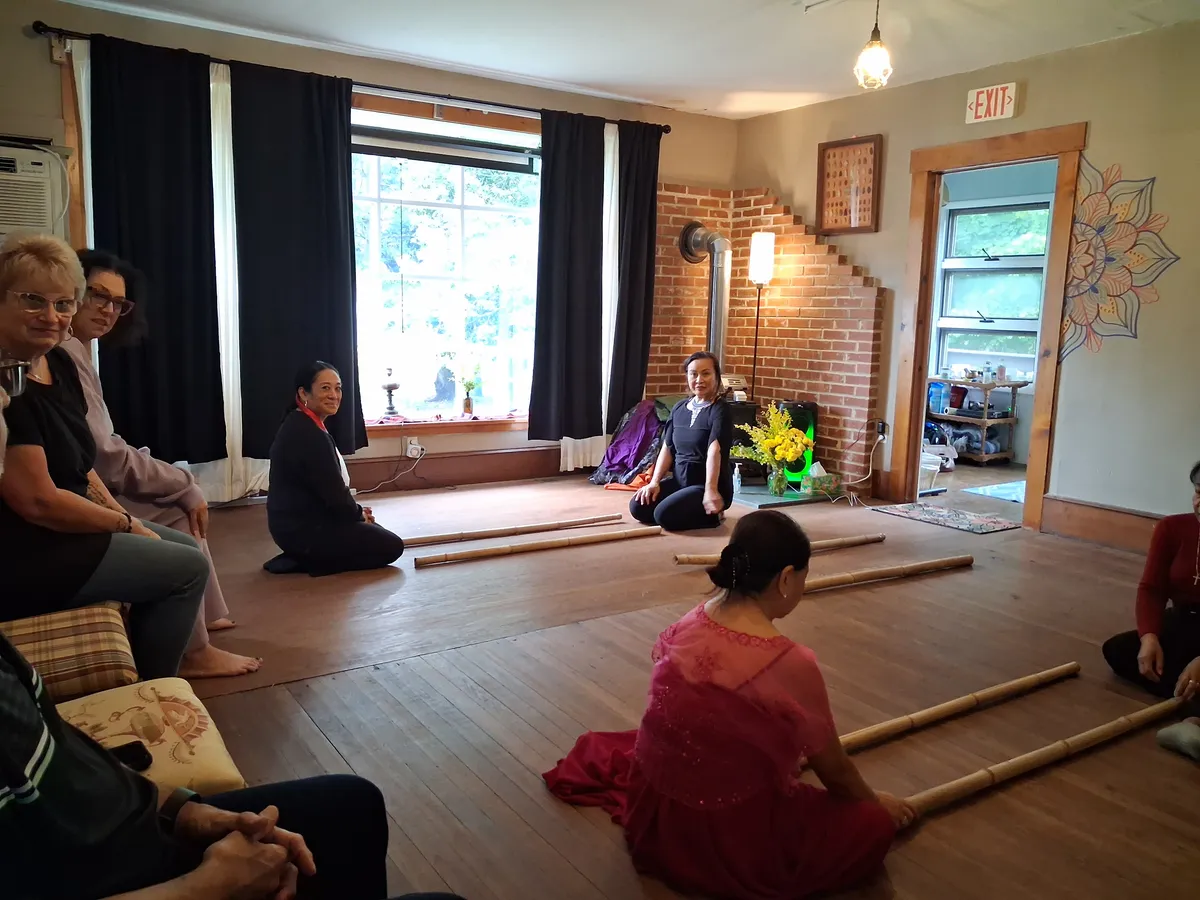
At Saturday’s Filipino Cultural Dance Workshop, I shared tea with guests using china that belonged to my great-grandmother. While we shared Filipino culture through dance, something from my own family’s history became part of the gathering, too.
Setting out that china made me think about how the past enters our lives. An object can stay in a family for generations, but sharing it gives it a new chapter. On Saturday, it became part of an afternoon at the Annex Building, where people made their own memories.
That experience stayed with me as I thought about our upcoming Community Conversation on past and future life regression. Beneath the different ways we understand memory is a question many of us recognize: What do we carry from those who came before us?
💃Watch the 46-second video from our Filipino Cultural Dance Workshop.
When tradition becomes something we share
A dance carries something forward each time someone teaches it. We learn the movements through practice, and the stories around them help people understand what they are participating in.
Our workshop offered a way to encounter Filipino culture through movement. There is a difference between hearing that a tradition exists and being invited to take part in it. Participation gives us a personal connection while leaving room to learn about the history and community from which the tradition comes.
My great-grandmother’s china carried a different kind of connection. Using it did not tell my guests her life story. It gave me an opportunity to acknowledge her place in mine.
We do not need identical backgrounds or religious beliefs to share such moments. We can listen to one another’s histories and recognize that a gathering means something different to each person in the room.
What biology can tell us?
Some of what we inherit is biological. DNA passes from parents to children, and researchers also study epigenetic marks: chemical changes that help regulate how genes are used without changing the DNA sequence itself. Much of this marking is reset between generations, although some marks can be passed on under particular circumstances.
A 2008 study of people exposed to the Dutch Hunger Winter around conception found differences in DNA methylation approximately six decades later, compared with their unexposed, same-sex siblings. The finding suggests that conditions very early in development can leave a lasting biological association. Because the participants were exposed before birth, this does not show that memories or experiences are inherited from distant ancestors.
Epigenetics offers a way to investigate how life circumstances affect biology. It has not established that DNA transmits an ancestor’s personal memories, and it does not establish reincarnation.
Other forms of inheritance are easier to recognize in daily life. We learn how to welcome guests, respond to difficulty, or observe important occasions. Sometimes we continue those patterns deliberately. Sometimes we notice them only after someone points them out.
Have past-life reports been studied?
Yes. At the University of Virginia’s Division of Perceptual Studies, researchers including Ian Stevenson and Jim Tucker have investigated children who spontaneously describe what they say are memories of previous lives. Their work includes examining whether reported details correspond with the life of a deceased person. These childhood reports are a different subject from memories or scenes experienced during adult regression sessions.
A 2024 observational study followed up with 23 American adults who had been interviewed about such reports as children. It explored the experiences’ later impact; it did not test or establish whether reincarnation explained them. Its small, selected sample also limits how broadly its findings can be applied.
This is an area of inquiry in which people reach different conclusions. A proposed previous incarnation and a biological ancestor are also different ideas. Research concerning one cannot automatically explain the other.
Exploring an experience with curiosity
People may approach regression through a spiritual belief in reincarnation. Others may understand the imagery symbolically or as an imaginative experience that prompts reflection.
Research gives us reason to think carefully about interpretation. In four experiments published in 1991, Nicholas Spanos and colleagues found that suggestions and expectations could shape the past-life identities participants described under hypnosis. A vivid scene, by itself, cannot verify that an event happened.
We can take a person’s experience seriously while also asking how its historical details could be independently checked. Those are compatible forms of attention.
Future-life exploration raises another question: How do we imagine what lies ahead? A 2007 brain-imaging study found overlapping activity during aspects of remembering personal events and imagining possible future events. That research concerns the mind’s ability to construct possibilities; it does not verify future incarnations or predictions.
For reflection, we can ask what an imagined future reveals about our present concerns, and what choices we want to make now. People can consider those questions while remaining rooted in their own faith or worldview.
Giving a legacy another chapter
Saturday’s gathering brought me back to something tangible: a family keepsake being used and a cultural tradition being shared.
We each have some choice in how we carry our histories forward. We can ask a relative about an object, write down a story, or make time to learn a tradition from someone who knows it. We can also consider which inherited patterns we want to change.
My great-grandmother’s china now has one more story attached to it: an afternoon of Filipino dance and tea at the Annex.
What have you received that you would like to give another chapter?
Continue the conversation with us
Curious About Past & Future Life Regression?
Saturday, October 24, 2026 · 2:00–3:30 p.m. Eastern
Free · Advance registration required
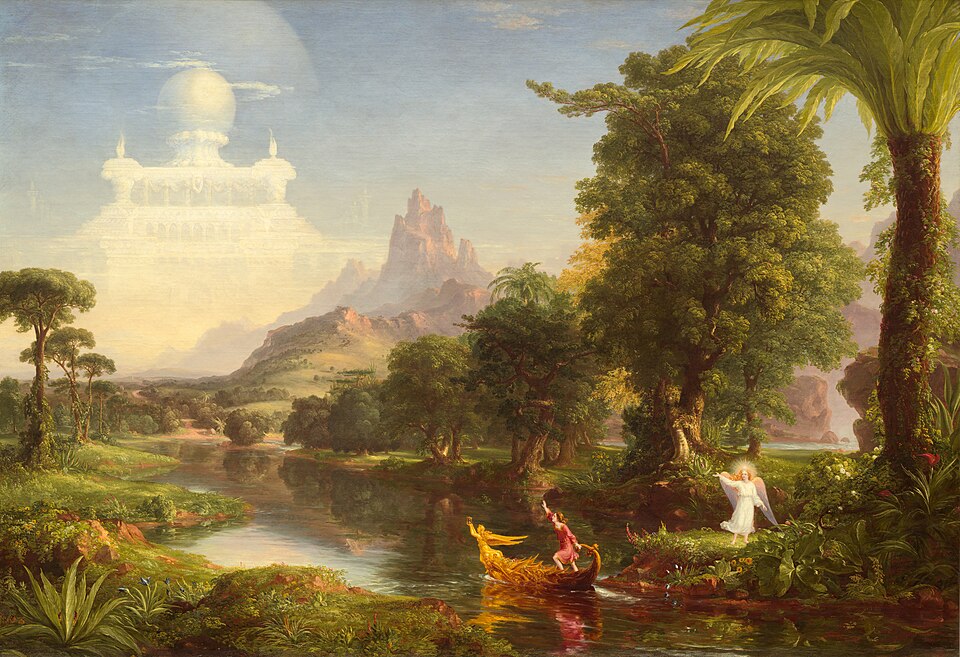
Join me for a short presentation and open discussion at the Annex Building, Dr. James Still Historic Office Site, 211 Church Road, Medford, NJ 08055. We will close with an optional 10-minute meditation for relaxation and grounding. The gathering does not include a regression session. A Zoom option is available by advance request.
View the schedule and registration information, or email [email protected].
Sources and further reading
National Human Genome Research Institute. Epigenomics Fact Sheet.
Heijmans, B. T., et al. (2008). Persistent epigenetic differences associated with prenatal exposure to famine in humans. PNAS, 105(44), 17046–17049.
University of Virginia, Division of Perceptual Studies. Children Who Report Memories of Past Lives.
Pehlivanova, M., Cozzolino, P. J., & Tucker, J. B. (2024). Impact of children’s purported past-life memories: a follow-up investigation of American cases. Frontiers in Psychology, 15, 1473340.
Spanos, N. P., Menary, E., Gabora, N. J., DuBreuil, S. C., & Dewhirst, B. (1991). Secondary identity enactments during hypnotic past-life regression: A sociocognitive perspective. Journal of Personality and Social Psychology, 61(2), 308–320.
Addis, D. R., Wong, A. T., & Schacter, D. L. (2007). Remembering the past and imagining the future: Common and distinct neural substrates during event construction and elaboration. Neuropsychologia, 45(7), 1363–1377.